

What Counts as “Real” Engagement in Digital Communication?

Every single day, digital users generate hundreds of millions of clicks, shares, bookmarks, and likes across social media platforms. These small digital gestures serve as the baseline currency of modern network exchange. When a user taps a heart icon beneath a statement, that action sends an immediate signal to both the author and the surrounding network. It reflects shared attention, community agreement, or personal appreciation. At their core, online interaction metrics were designed to represent authentic human reaction across decentralized networks.
For creators, public figures, and businesses, these public numbers frequently decide whether an idea spreads or fades into silence. A post with noticeable initial traction attracts more readers because individuals naturally gravitate toward active discussions. Because algorithmic reach depends so heavily on early momentum, many online operators seek out external growth solutions. Some individuals decide to visit sites like Social Crow to purchase rapid interaction packages in an attempt to spark organic interest through visible social proof.
Why Visible Metrics Still Drive Online Communication
Public interaction data remains one of the fastest methods for measuring public sentiment at scale. When used accurately, quantitative signals give communicators and audiences a shared framework for evaluating relevance.
- Social Proof: Visible feedback helps new visitors evaluate the credibility of an unfamiliar voice.
- Audience Alignment: Writers learn which concepts resonate by studying which updates receive sustained responses.
- Information Discovery: Distribution systems rely on engagement signals to deliver relevant discussions to interested audiences.
Data indicate that digital endorsements function as essential navigation markers. A study published by the Pew Research Center revealed that a small percentage of highly active participants produce the majority of public posts on major platforms. For the quieter majority, passive actions such as likes, reposts, and bookmarks represent their primary form of civic participation. These silent signals allow everyday observers to support ideas and influence public conversations without drafting original commentary.
Furthermore, findings from the MIT Sloan School of Management show that collective digital signals help individuals filter through massive volumes of daily information. When readers see widespread community endorsement, their cognitive processing treats the message as vetted material. In this sense, baseline engagement metrics provide an essential filtering mechanism for public discourse.
Where Artificial Numbers Distort the Conversation
This communication model encounters serious problems when numbers no longer reflect genuine human reaction. When digital reactions are purchased from commercial vendors, the relationship between quality writing and community endorsement disappears. Instead of reflecting genuine appreciation, metrics transform into manufactured commodities.
Third-party service providers often deploy coordinated networks to simulate genuine human enthusiasm. These tactics produce a superficial layer of credibility that can elevate low-quality or deceptive messaging. Reports from the Stanford Internet Observatory demonstrate how synthetic engagement warps public perception. When coordinated clusters flood a discussion thread with automated endorsements, calculating authentic community sentiment becomes nearly impossible.
This artificial inflation damages trust across the entire digital economy. Commercial advertisers invest significant budgets based on published engagement figures, only to discover that human buyers never viewed their campaigns. Everyday readers encounter repetitive spam and deceptive promotional threads that gained prominence through financial manipulation rather than organic merit. When popularity is separated from human intent, the metric loses its original communicative meaning.
Adapting Beyond the Simple Click Count
To protect the integrity of digital signals, communication platforms are altering how they measure and evaluate user interest. As technology transforms social media marketing, the traditional strategy of tracking raw click volume is giving way to multidimensional behavioral analysis.
Engineering teams at leading networks now employ machine learning models to detect unnatural interaction clusters. Research published by Indiana University’s Observatory on Social Media shows that modern detection tools evaluate posting frequency, account connection graphs, and interaction timestamps. When hundreds of endorsements appear within seconds from newly created accounts that lack prior history, automated systems flag and suppress those actions.
Beyond automated filtering, digital communication platforms are introducing deeper verification layers:
- Account Authentication: Connecting specific platform features to verified identities to reduce disposable bot networks.
- Attention Duration: Measuring the actual dwell time a user spends reading an article before interacting with it.
- Conversational Depth: Elevating detailed replies and contextual quote posts above simple one-click reactions.
Experts note that measuring attention depth offers a much more accurate picture of human resonance than tallying simple button presses. If an account likes a complex analytical thread within half a second of scrolling, software can recognize that the user never consumed the material. By prioritizing active reading time and meaningful commentary, modern networks are gradually separating authentic human exchange from automated noise.
Reframing Real Value in Digital Spaces
Genuine engagement cannot be defined by isolated numbers on a profile. Real connection happens when a piece of writing stimulates thoughtful thought, challenges an assumption, or inspires tangible action. While commercial services will continue attempting to game ranking algorithms, modern verification standards are steadily restoring clarity to online communication. As digital spaces evolve, authentic human attention will remain the most valuable signal of all.
 Technology and communications have changed the way people connect, work, and share information. Businesses now rely heavily on websites, digital platforms, and online communication channels to reach customers. Whether a company provides software solutions, telecommunications services, cloud platforms, or communication tools, having a strong online presence is essential.
 Watermarks have been around for centuries. They once lived quietly in paper, visible only when held up to light. Today, they play a far more active role. In modern communication technology, watermarks help protect content, verify authenticity, and trace how information moves across networks, topics often debated here in Reddit threads about getting rid of watermarks. They work behind the scenes, often unnoticed, but they matter more than most users realize. At a basic level, a watermark is extra information embedded into a piece of content. That content could be an image, video, audio file, document, or even
  As far as technology and communications are concerned, how you say it is as important as what you say. There should be clarity, rhythm and feeling in every line of what your readers or listeners expect. This is more likely to be so even when the subject is very technical. AI devices can generate text, but to create text that is readable, it requires a guide. Otherwise, it will sound like it is text generated by, say, a computer.
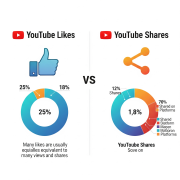 Engagement tokens are likes. Easy, quick, and a symbol of approval, that’s what they are. A large number of likes increases the video’s discoverability and makes it more likely that algorithms will recommend it to users.
 The gaming world has grown fast, and so have the tools that shape how we play. Technology and communication platforms now play a big role, especially in tactical games. One major area this shows up in is Tarkov cheats. While some players use cheats for fun or shortcuts, others see them as a threat to fair play.
 Online shoppers expect seamless, secure interactions with their favorite brands. eCommerce businesses face immense pressure to deliver reliable communication channels that keep customers engaged and protected. From order confirmations to personalized offers, every touchpoint matters. Yet, cyber threats, system downtimes, and high-traffic surges can disrupt these connections, risking revenue and reputation. How can businesses ensure uninterrupted, trustworthy communication? The answer lies in robust strategies that prioritize platform stability, proactive monitoring, and brand integrity.
 Search engine optimization (SEO) matters for every digital business—but for
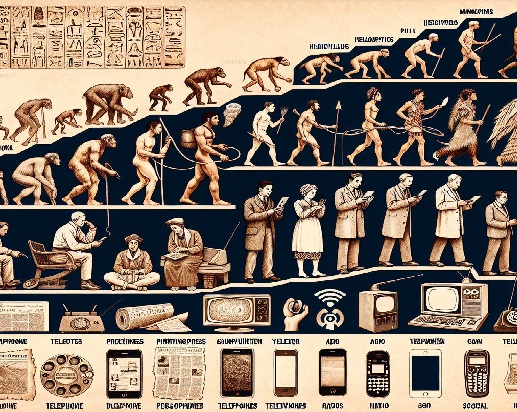











 In the rapidly evolving landscape of modern business, the confluence of technology, communication, and example of tacit knowledge has become a focal point for companies striving for efficiency and innovation.


 is fast becoming the name of the game to get past the number of matches that will qualify players to compete in Ranked Games at a faster pace. Yet this first person shooter game is more than just the conventional repetitive game that allows easy and quick mastery of mechanical skills. Moreover, Riot Games now requires players to reach Level 20 before they can enter the arena for Ranked Games. All the more making Valorant a highly competitive game.
 But individual and overall team performances count in Valorant’s rank rating system. The latter evaluates wins, losses and the relevant performance points that will be summed up as Rank Rating (RR). The RR in turn, determines the rank to which a player will be designated. That denotes that win records garner high points that could enable him to reach the Iron 2 or Iron 3 Rank.